
How to Improve Website Rankings on Google in 2026
If you are running a business, having a website is necessary to attract more visitors and generate leads. A website needs more than just appealing design to become effective – it needs useful content, keywords, technical SEO, and a decent user experience.
SEO practices are constantly evolving, but learning how to improve website rankings on Google in 2026 is still beneficial for many businesses and websites, such as blogs or online stores. Need help improving your website’s SEO? Explore our SEO services to discover how we can help improve your website’s search visibility.
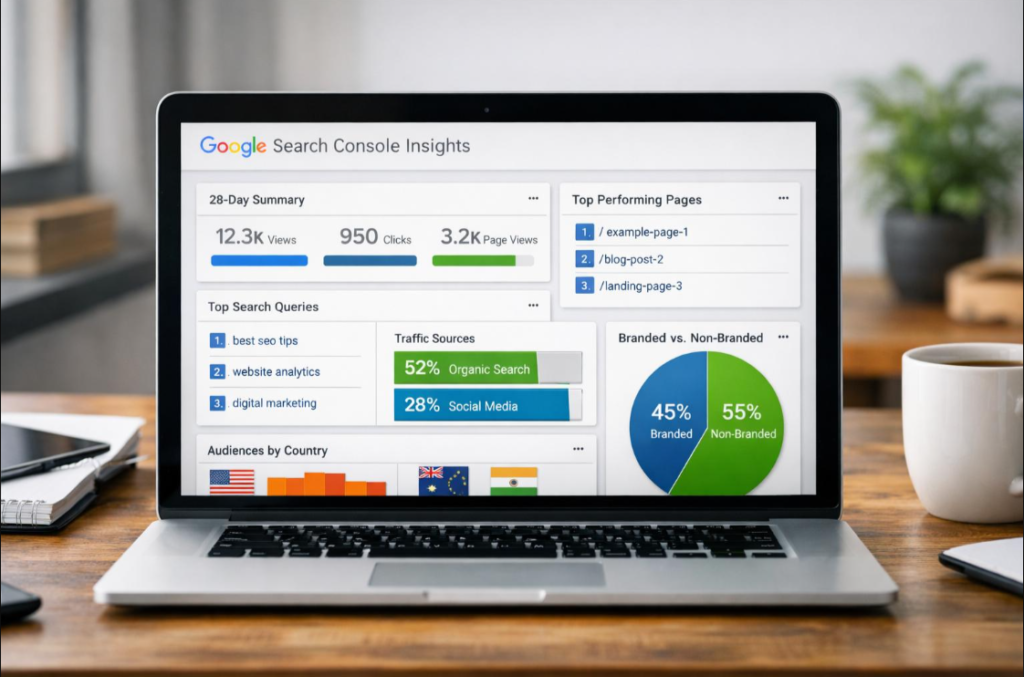
What Does Website Ranking on Google Mean?
Website ranking refers to the position a webpage appears in Google’s organic search results for a particular search query. For example, when someone searches for a service or solution, Google displays pages it considers relevant and helpful for that query.
Higher rankings can increase the opportunity to receive clicks, but rankings vary by query, location, device, and other factors. The goal of SEO is to make your pages more relevant, accessible, and useful to the people you want to reach.
How to Improve Website Rankings on Google
Improving Google search rankings requires a combination of content optimization, technical improvements, and ongoing performance analysis.
1. Conduct Keyword Research
Keyword research helps you understand the terms people use when searching for information, products, or services. Identify a primary keyword for each page and use relevant supporting keywords to cover related questions.
For example, a page targeting website rankings can also discuss improving Google search rankings, website SEO, and organic traffic. Choose keywords based on search intent, relevance, competition, and the needs of your audience.
Avoid inserting the same keyword repeatedly just to increase its frequency. Natural language and useful information should guide your content.
2. Understand Search Intent
Search intent is the reason behind a search query. People may want to learn something, compare available options, find a particular website, or purchase a service.
Before writing a page, review the types of results appearing for your target query. If users are looking for practical instructions, provide clear steps, examples, and actionable recommendations. Matching the content to the searcher’s needs makes the page more useful.
3. Create Helpful and Original Content
Useful content is a central part of a successful SEO strategy. Answer the main question clearly, explain important concepts, and include practical examples that help readers take action.
Improve existing articles when information becomes outdated, add missing explanations, and remove unnecessary repetition. Where appropriate, include original observations, screenshots, case studies, or examples from your own experience.
Google recommends creating helpful, reliable, people-first content rather than content designed primarily to manipulate rankings.
4. Optimize Page Titles and Headings
Write a clear, descriptive SEO title that accurately represents the page. Use one clear H1 as the main visible heading, then organize the article with relevant H2 and H3 subheadings.
For this topic, the H1 can be “How to Improve Website Rankings on Google in 2026.” Supporting H2 headings can cover keyword research, on-page SEO, technical SEO, and performance tracking.
Include relevant keywords where they fit naturally. Not every heading needs an exact-match keyword.
5. Improve Internal Linking
nternal links connect related pages on your website. They help visitors discover additional information and help search engines understand how your content is connected.
Link to relevant service pages, guides, and related articles from appropriate sections of your content. Use descriptive anchor text that explains what the linked page covers.
Review important pages to make sure they are accessible through crawlable links and are not unnecessarily isolated from the rest of your website.
On-Page SEO Techniques to Improve Rankings
On-page SEO involves optimizing the content and elements of individual webpages so that users and search engines can understand them more easily.
Use Keywords Naturally
Place the primary keyword in important locations where appropriate, such as the SEO title, H1, introduction, and relevant body text. Use supporting terms in sections where they add meaning.There is no universal keyword density that guarantees higher rankings. Focus on clarity, relevance, and answering the reader’s questions.
Optimize Images and URLs
Use descriptive image filenames and accurate alt text for meaningful images. Compress large image files and choose suitable formats to support performance.Keep URLs short, readable, and descriptive. Avoid unnecessary parameters or confusing strings when a simple URL can communicate the page topic.
Write a Useful Meta Description
A meta description should summarize the page and explain why it may be useful to a searcher. Include the main topic naturally and avoid exaggerated promises.Google may generate a different search-result snippet from the page content, so a meta description does not guarantee that the exact text will appear in search results.
Technical SEO Checklist for Better Google Rankings
Technical SEO helps search engines discover, crawl, render, and index your website correctly.
Need help identifying technical SEO issues on your website? Sevenaish Digital Agency can help you review website performance, indexing, and technical SEO improvements.
Improve Website Loading Speed
Check your website’s performance and identify issues such as oversized images, unnecessary scripts, or slow server responses. Google PageSpeed Insights can help you investigate performance problems and Core Web Vitals.
Make Your Website Mobile-Friendly
Ensure that text is readable, navigation works properly, and buttons and forms are easy to use on mobile devices. Test important pages on different screen sizes.
Fix Crawling and Indexing Issues
Use Google Search Console to review indexing reports and URL inspection results. Check for accidental noindex directives, incorrect canonical tags, broken pages, and other issues that may prevent important content from appearing in Google Search.
Submit an accurate XML sitemap where appropriate, but remember that submitting a sitemap does not guarantee indexing.
Use Structured Data Where Relevant
Structured data can help Google understand specific information about a page and may make it eligible for supported search-result enhancements. Use the relevant schema type, follow Google’s guidelines, and validate the markup.
Structured data does not guarantee rich results or higher rankings.
How to Increase Organic Traffic
Organic traffic comes from unpaid search results. To grow it, focus on publishing useful content that addresses relevant search queries and improving pages that already receive impressions.
Review Google Search Console to identify queries that generate impressions but relatively few clicks. Check whether your title and content accurately address those searches. Improve pages with declining performance, strengthen relevant internal links, and expand content where readers still need answers.
Build backlinks naturally by creating useful resources that other relevant websites may want to reference. Avoid spammy link schemes or purchasing links intended to manipulate rankings.
How to Measure Website Ranking Improvements
SEO improvements should be measured using real performance data rather than assumptions.
Google Search Console helps you review search queries, impressions, clicks, click-through rate, and average position. Google Analytics can help you understand what visitors do after arriving on your website.
Compare performance over suitable periods, account for seasonal changes, and evaluate whether your organic visitors are taking meaningful actions, such as submitting a form or contacting your business.
SEO results take time, and no technique guarantees a particular position. Make changes based on evidence and continue improving the pages that matter most to your audience.
Common SEO Mistakes to Avoid
Avoid keyword stuffing, copied content, misleading page titles, broken internal links, and unnecessary URL changes. Do not create multiple pages targeting almost identical queries unless each page serves a distinct purpose.
Avoid focusing only on rankings while ignoring the quality of visitors and their experience. A useful page should help readers understand the topic and take their next step.
Frequently Asked Questions
How long does it take to improve Google rankings?
Avoid keyword stuffing, copied content, misleading page titles, broken internal links, and unnecessary URL changes. Do not create multiple pages targeting almost identical queries unless each page serves a distinct purpose.
Avoid focusing only on rankings while ignoring the quality of visitors and their experience. A useful page should help readers understand the topic and take their next step.
Does website speed affect Google rankings?
Page experience and Core Web Vitals are part of Google’s broader considerations. Improving speed can also make a website more pleasant to use, but speed alone does not guarantee higher rankings.
How can I check my website's Google rankings?
Google Search Console provides query and page performance data, including clicks, impressions, click-through rate, and average position. Third-party rank-tracking tools can provide additional monitoring.
Do keywords in headings help SEO?
Descriptive headings help readers and search engines understand a page’s structure and subject. Use relevant keywords when they fit naturally, rather than repeating exact phrases in every heading.
Conclusion
Learning how to improve website rankings on Google requires a consistent approach to keyword research, helpful content, on-page optimization, technical SEO, and performance measurement. Start by identifying the most important pages on your website, fixing technical issues, and improving content to answer users’ questions.
Review the results regularly in Google Search Console and make informed improvements over time. A user-focused SEO strategy can support better search visibility and sustainable organic growth. If you are running a business, having a website is necessary to attract more visitors and generate leads. A website needs more than just appealing design to become effective – it needs useful content, keywords, technical SEO, and a decent user experience.
SEO practices are constantly evolving, but learning how to improve website rankings on Google in 2026 is still beneficial for many businesses and websites, such as blogs or online stores. Need help improving your website’s SEO? Explore our SEO services to discover how we can help improve your website’s search visibility.